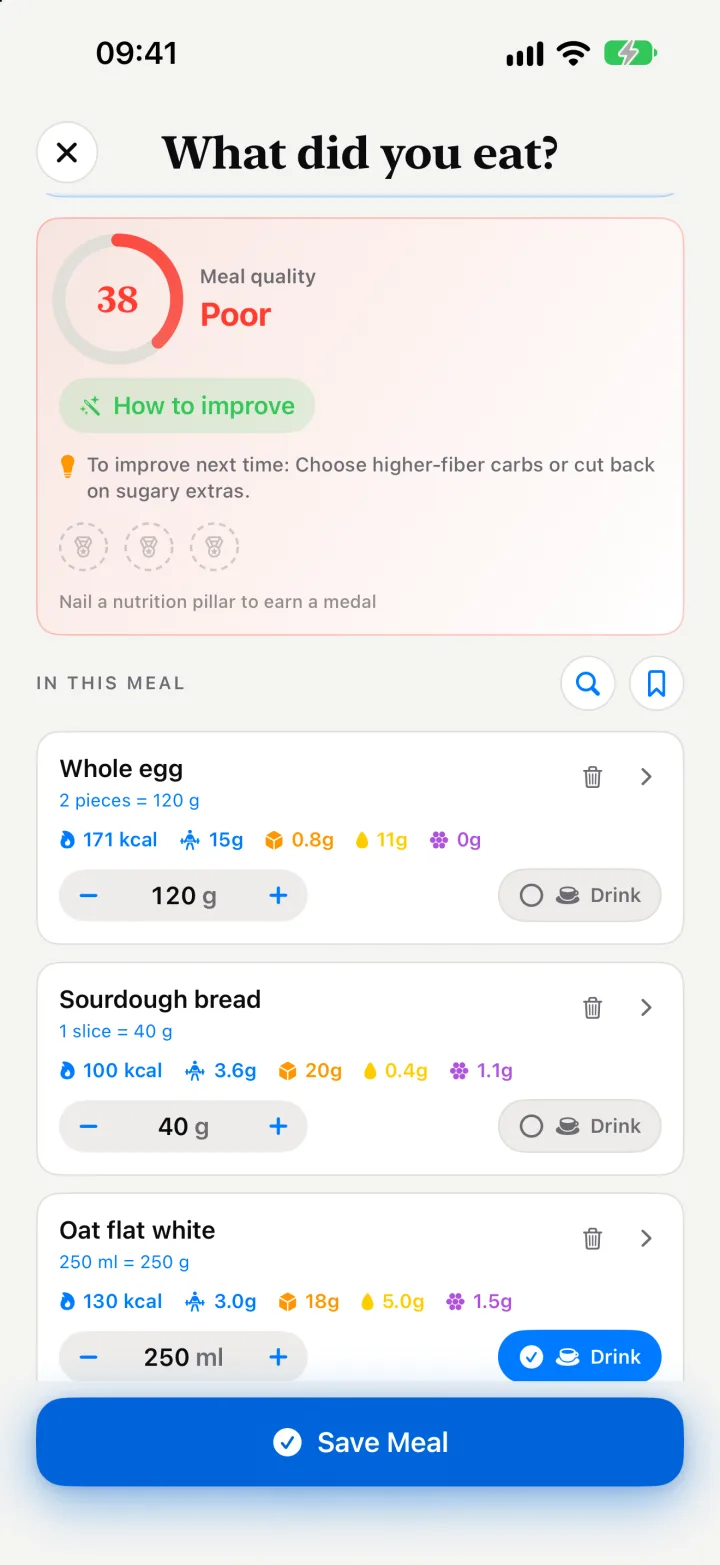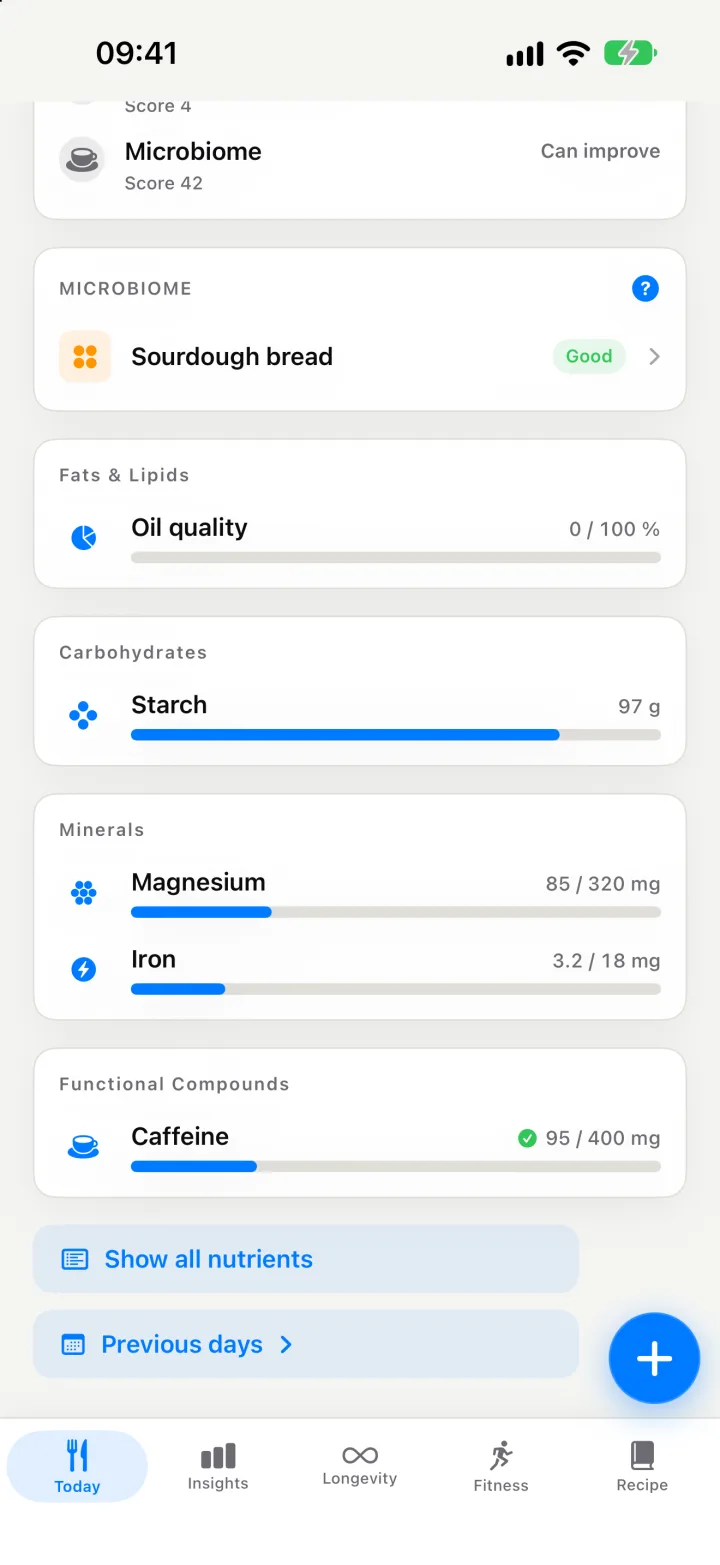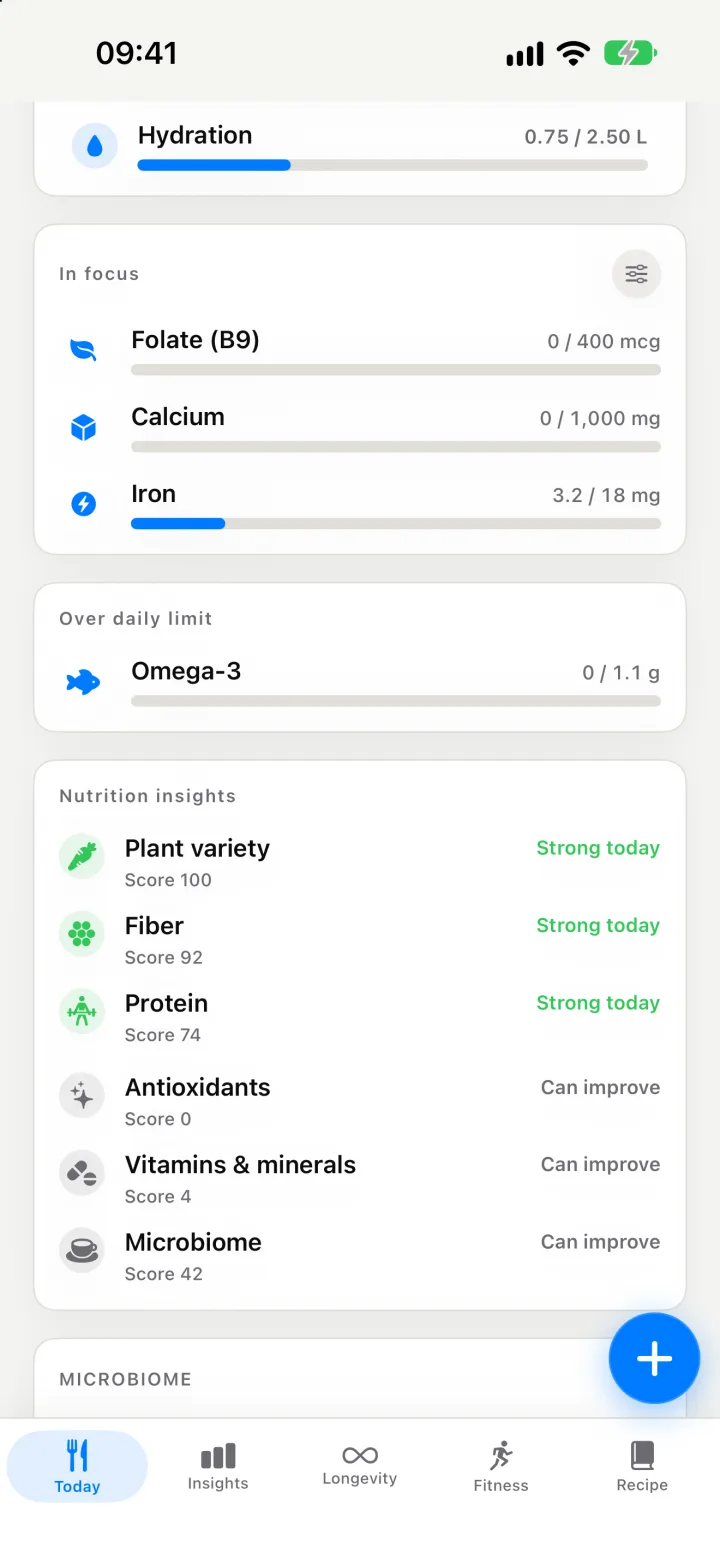
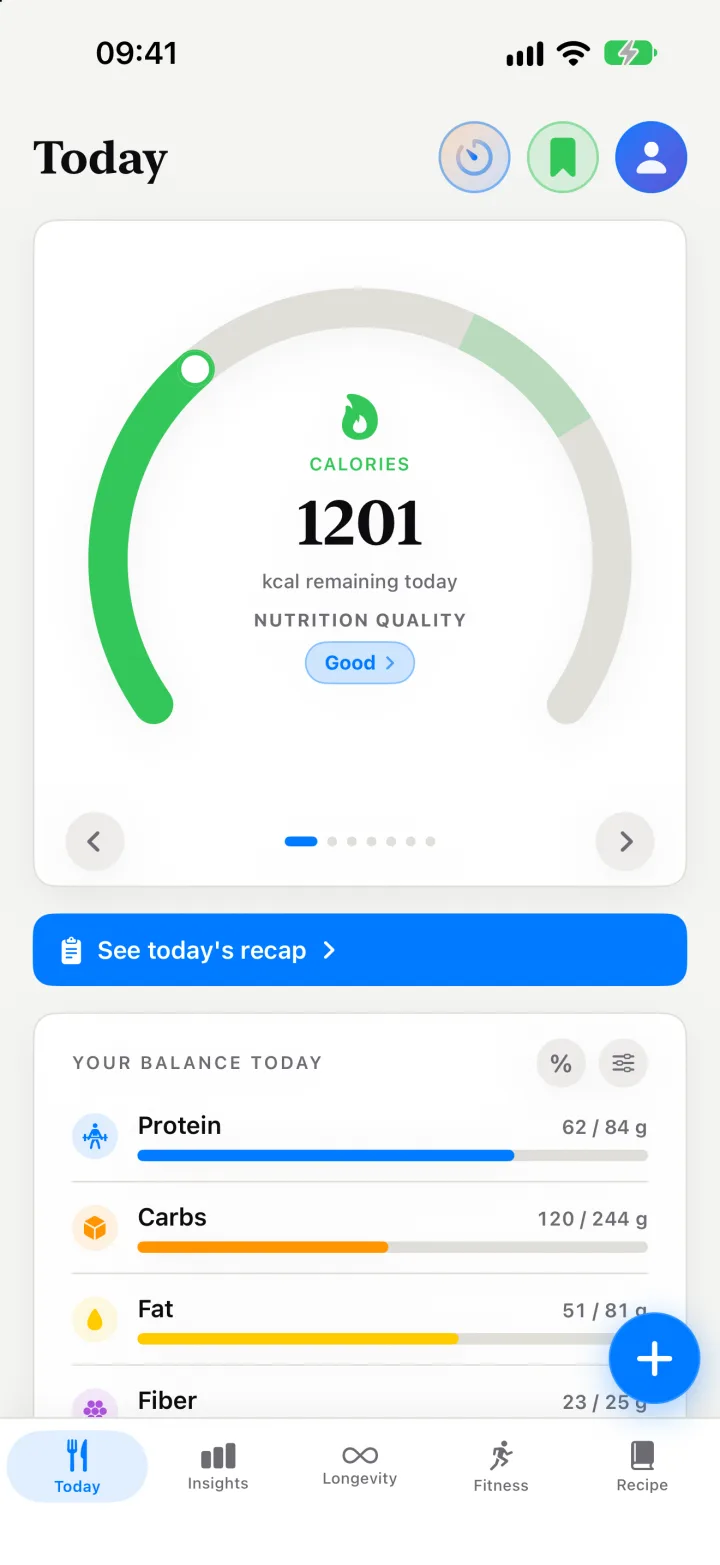
Your macronutrients are protein, carbohydrates and fat, the three things that provide almost all of your calories. Two days with the same calorie total can have very different macro balances, and that balance shapes how full you feel, how well you recover from training, and how much muscle you keep while losing weight.
Protein is set first
Kality sets protein from your body weight, because what your muscles need depends on how much of you there is, not on how many calories you eat. The starting point depends on your goal:
| Goal | Starting protein |
|---|---|
| Lose weight | 1.8 g per kg of body weight |
| Build muscle | 1.8 g per kg |
| Gain weight | 1.6 g per kg |
| Maintain | 1.4 g per kg |
Your activity level then moves that up or down by as much as 0.2 g/kg. The final number always stays between 1.2 and 2.2 g/kg, and never exceeds 40% of your calories.
Why is protein highest when you’re losing weight? In a calorie deficit your body is more willing to break down muscle, and a higher protein intake helps protect it. Protein also tends to keep you fuller for longer than the same calories from carbs or fat.
Carbs and fat fill the rest
Once protein is set, the remaining calories are split between carbs and fat according to the eating style you chose:
- Balanced, Mediterranean, vegetarian, vegan and paleo each have their own carb-to-fat ratio. Fat never drops below 20% of calories, because your body needs it to absorb vitamins A, D, E and K.
- Keto fixes carbs at 25 g a day and gives the rest to fat. Protein is capped at 1.7 g/kg.
- Carnivore fixes carbs at 10 g, with the same protein cap.
Fiber gets its own target
Fiber is technically a carbohydrate, but it behaves very differently. It feeds your gut bacteria, slows digestion and is linked to better long-term health. Kality tracks it separately with a daily goal of 25 g for women and 38 g for men. It’s also one of the two most heavily weighted parts of the Longevity Score.
How to use macro targets without going mad
- Aim for protein, then let the rest float. If protein lands near target and calories are in range, most days are going well.
- Look at the week, not the day. One high-carb dinner is noise. A week that runs 40 g short on protein is a pattern worth fixing.
- Ask Kal. Say “What should my next meal be?” and the voice coach suggests something that fills the gap you have left today.
If you work with a trainer or nutrition coach, they can see your macros against your goals over 7 to 90 days and change the targets from their dashboard. Here’s how that works for coaches.
Kality gives general nutrition information, not medical advice. If you have a medical condition, are pregnant, or have a history of disordered eating, talk to a qualified health professional before changing how you eat.