Dietary assessment in practice usually relies on memory. A 24-hour recall or a food-frequency questionnaire asks patients to remember what they ate and how much, and patients tend to under-report, especially snacks, drinks and cooking fats. A food diary is better, but only if the patient keeps it and you can read it.
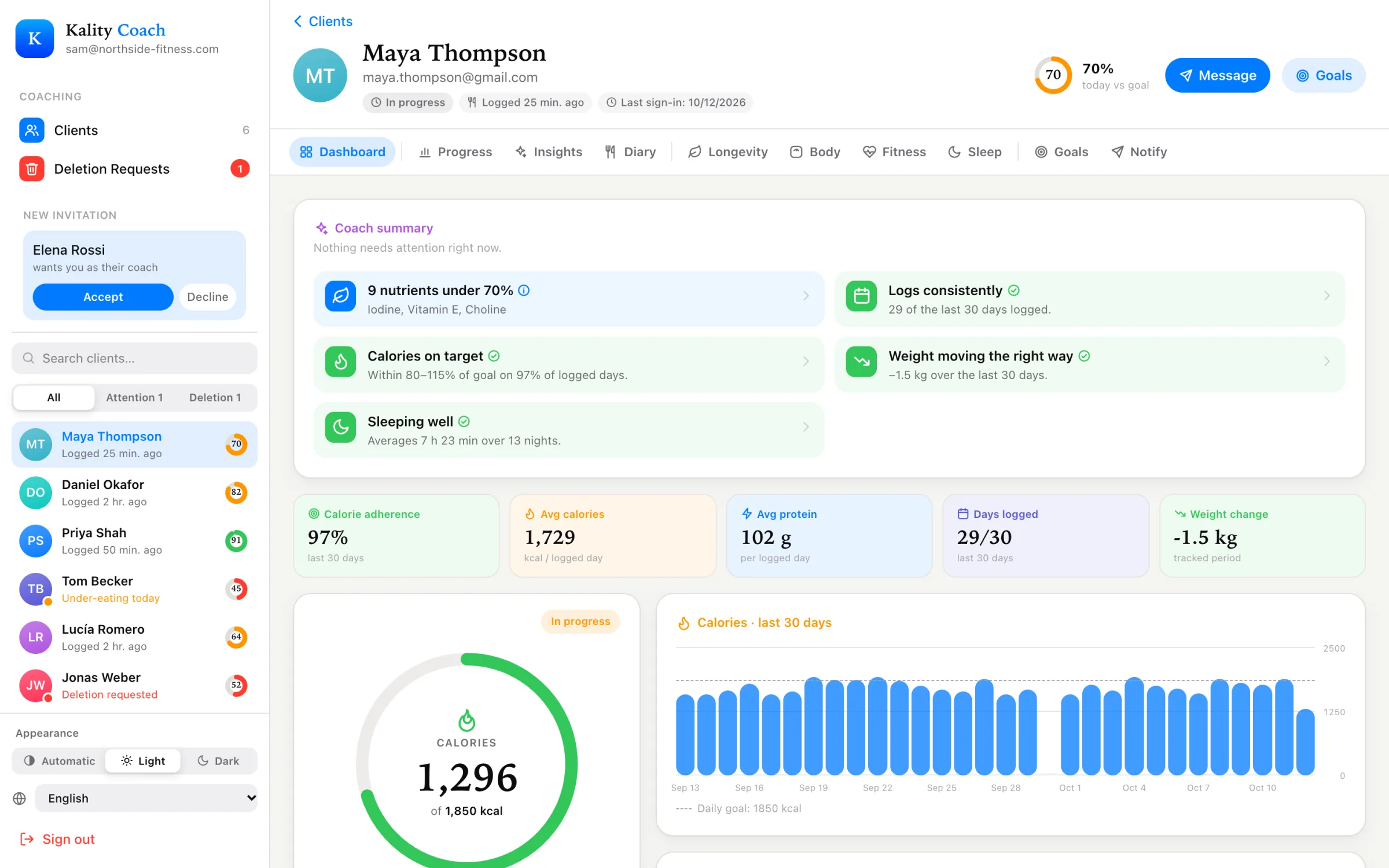
Kality is a patient-facing food tracker with a professional dashboard on the other side. Patients log in seconds by speaking. You see the result as structured data: ingredients, portions, calories, macros and more than forty micronutrients, over days, weeks or months.
Who it’s for
- Registered dietitians and nutritionists who want intake data between consultations instead of at them.
- GPs and physicians supporting weight management, blood pressure, or patients whose diet is part of the plan.
- Sports medicine and physiotherapy teams who need to know whether an athlete is fueling enough to recover.
Clinicians use the same free dashboard as coaches. There’s no separate “clinical” tier. The data is the same and the consent model is the same.
What you can follow
Intake against targets
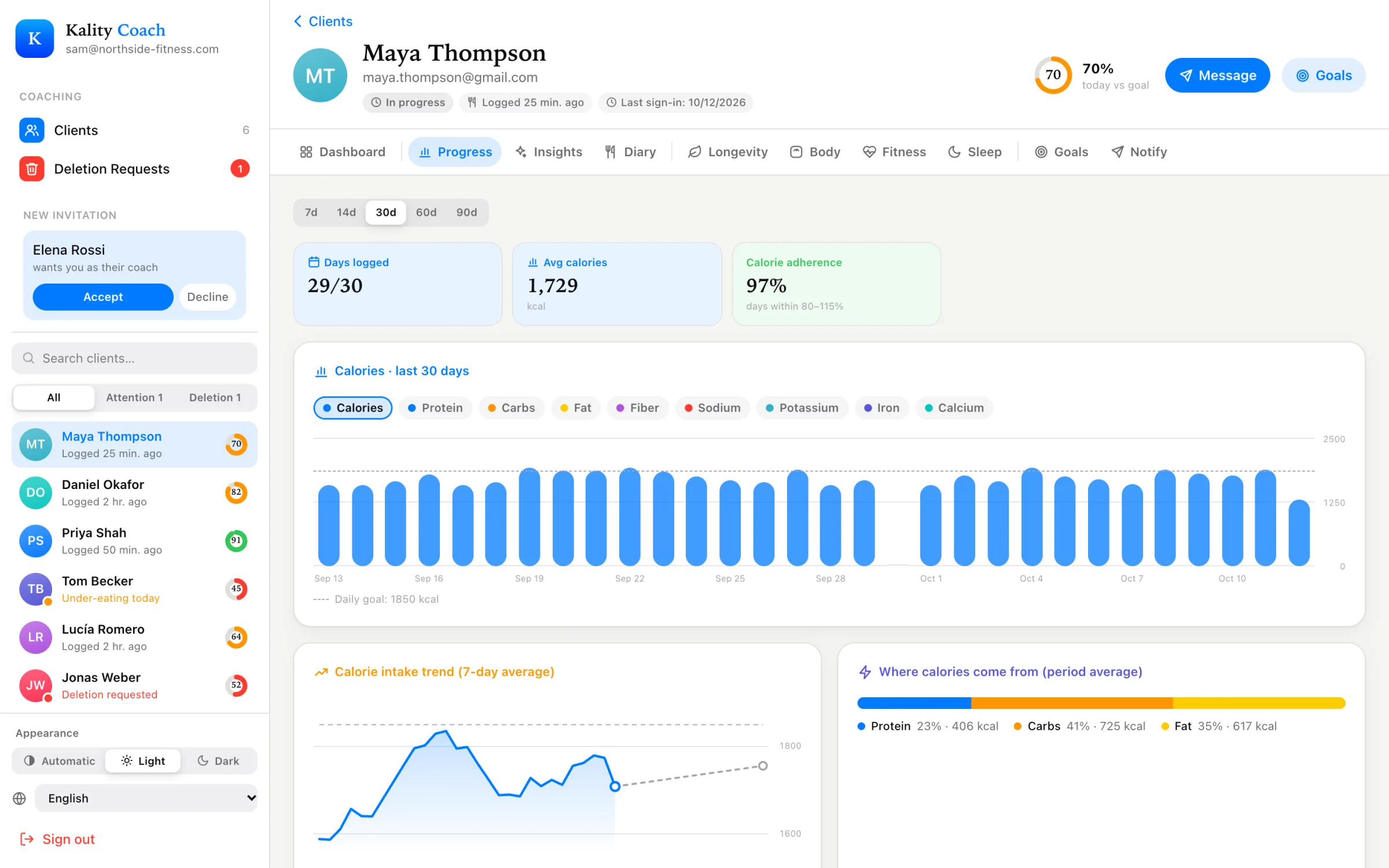
The Progress tab plots 7 to 90 days of calories, protein, carbs, fat, sodium, potassium, iron and calcium against the patient’s goals. It’s useful when you’ve advised lower sodium, higher potassium or more iron, and want to see whether it’s happening.
Gaps and excesses
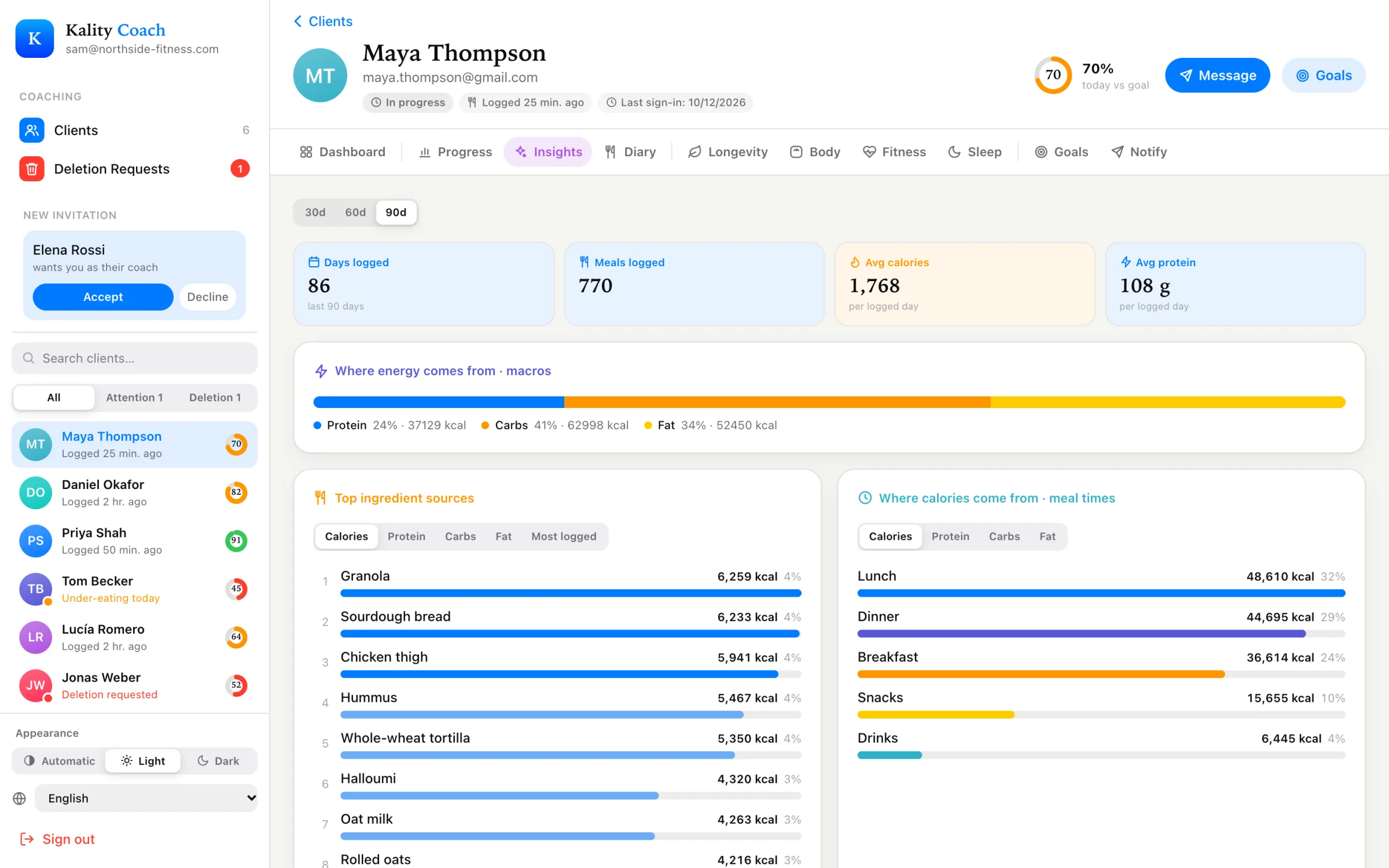
The Insights tab lists vitamins and minerals to watch, meaning nutrients averaging under 90% of target. It also shows daily limits with the number of days over the limit for sodium, saturated fat, added sugar, caffeine, cholesterol and trans fat. The Dashboard keeps a 90-day “nutrients to watch” list, so a long-running shortfall doesn’t get lost in one good week.
Supplements
Patients can log supplements, and Insights shows how much of each nutrient comes from food and how much from supplements. That helps when you’re deciding whether to add a supplement, or checking that one you prescribed is being taken.
Habits, not just numbers
Meal timing, the ingredients a patient relies on most, and how meals made them feel are all in Insights. Patterns like late eating or one food doing a lot of the work are easier to talk about when you both can see them.
Weight and activity
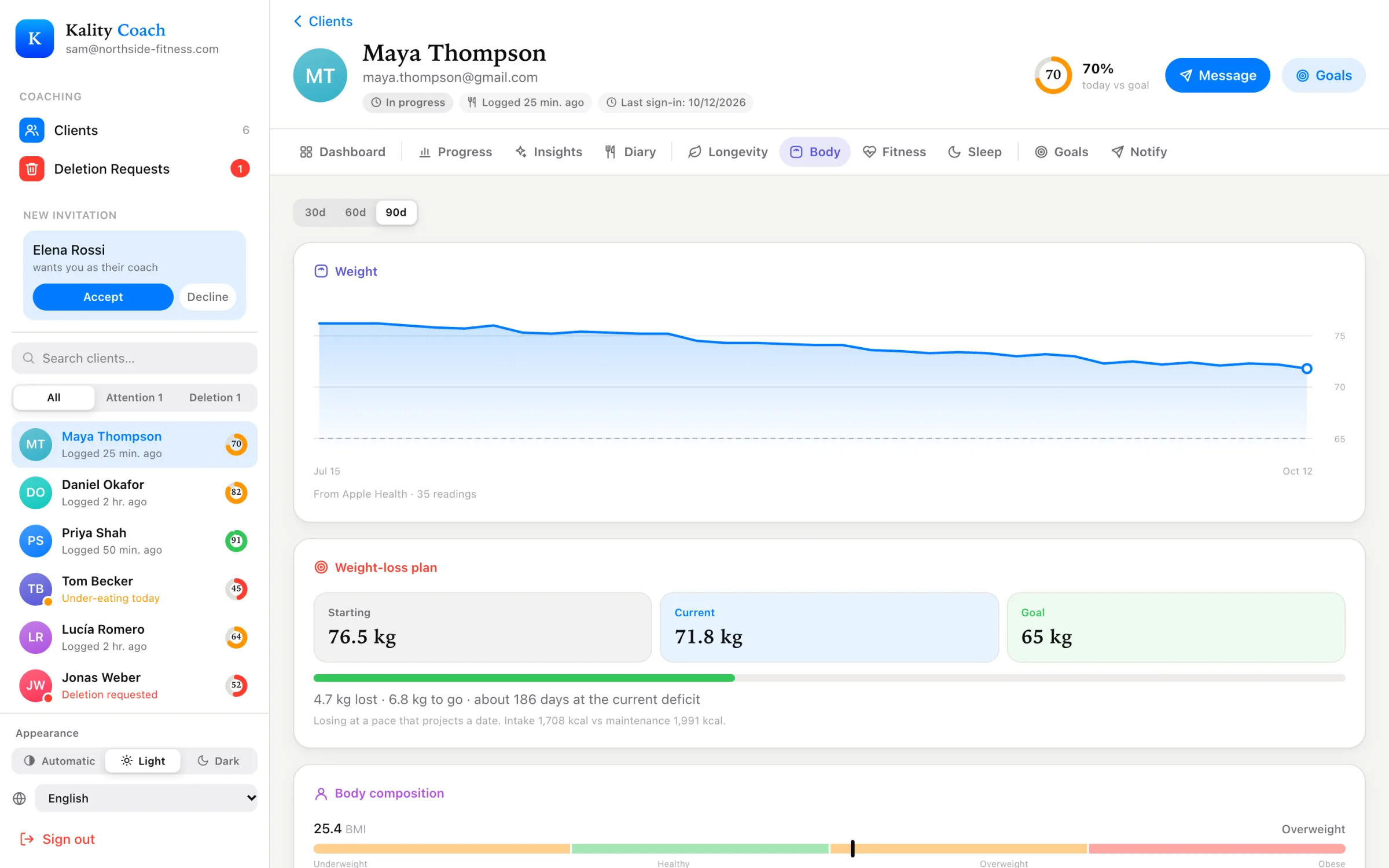
The Body tab shows weight trend, BMI, body fat and lean mass, and the patient’s weight plan with an estimated goal date. If the patient shares Apple Health data, the Fitness tab adds steps, workouts, sleep duration and resting heart rate.
Set targets that fit the patient
Kality’s default targets are set by age and sex from standard reference intakes. You can override any of them from the Goals tab: calories and macros, plus 40 micronutrient targets such as a sodium goal, a higher iron target or a potassium goal. Changes appear on the patient’s phone in real time. Your advice turns into the numbers they see every day.
What Kality is not
Consent built for health data
Heart rate, sleep and body composition are special-category data under GDPR, so Kality asks for explicit consent. Before a patient connects, the app lists exactly what you’ll see. More sensitive metrics, heart rate variability, blood oxygen and respiratory rate, need a separate opt-in, and patients can share everything else without them. Consent is recorded with a version and date, and patients can withdraw it at any time. The full detail is here.
Getting started
Professional accounts are set up by the Kality team. Email us with your name, profession and practice, and any data-protection requirements you work under. The dashboard is free for professionals. Patients need Kality Premium to connect.
Kality gives general nutrition information, not medical advice. If you have a medical condition, are pregnant, or have a history of disordered eating, talk to a qualified health professional before changing how you eat.